First Home Buyer Guide 2026
First Home Buyer Conveyancing Guide Australia 2026
Buying your first home in Australia in 2026? This guide explains the conveyancing process, legal checks, government grants, stamp duty concessions, settlement timelines and common mistakes first home buyers should avoid.
Buying Your First Home in 2026
Buying your first home is exciting, but it can also feel overwhelming. Between loan approvals, contract reviews, government schemes, stamp duty concessions and settlement deadlines, there are many steps to manage before the keys are yours.
In Victoria, first home buyers may be eligible for a range of grants, exemptions and concessions. The Victorian Government support for first home buyers outlines assistance including the First Home Owner Grant, stamp duty savings and off-the-plan concessions.
A licensed conveyancer can help you understand the legal process, review the Contract of Sale, conduct property searches, assist with eligible concessions and coordinate settlement.
Why 2026 May Present Opportunities for Melbourne First Home Buyers
Melbourne remains a competitive property market, with many first home buyers looking at units, townhouses and house-and-land packages in outer suburbs and growth corridors to stay within government scheme price caps.
Buyers may consider areas such as Craigieburn, Werribee, Tarneit, Melton, Cranbourne, Pakenham and Clyde, depending on budget, lifestyle and borrowing capacity.
Before making an offer, it is important to understand your finance position, check which grants or concessions may apply, and have the contract reviewed by a conveyancer.
What Is Conveyancing?
Conveyancing is the legal process of transferring property ownership from the seller to the buyer.
For first home buyers, conveyancing helps ensure the contract is reviewed, legal searches are completed, settlement is coordinated and ownership is transferred correctly.
To learn more, read our guide: What Is Conveyancing and What Does a Conveyancer Do?
Why First Home Buyers Need a Conveyancer
- Review the Contract of Sale before signing
- Check special conditions and finance clauses
- Identify title issues, easements and restrictions
- Conduct property searches and due diligence
- Assist with eligible grants and concessions
- Coordinate settlement and key deadlines
First Home Buyer Grants and Assistance Available in 2026
Government assistance can make a significant difference for eligible first home buyers. However, eligibility rules, property value caps and residency requirements can vary, so it is important to check the official criteria before relying on any benefit.
First Home Owner Grant
In Victoria, eligible first home buyers may receive a $10,000 First Home Owner Grant when buying or building a new home valued at $750,000 or less.
Learn more: SRO Victoria – First Home Owner Grant
Stamp Duty Exemption or Concession
Eligible first home buyers in Victoria may pay no stamp duty on homes valued up to $600,000, with a tapered concession available for homes valued between $600,001 and $750,000.
Learn more: Victorian Government – Stamp Duty Support
5% Deposit Scheme
The Australian Government 5% Deposit Scheme may allow eligible first home buyers to purchase with a lower deposit and avoid Lenders Mortgage Insurance.
Learn more: Australian Government First Home Buyers Portal
Help to Buy Scheme
The Help to Buy shared equity scheme may allow eligible buyers to purchase with a minimum 2% deposit, with the Australian Government contributing part of the purchase price.
Learn more: Help to Buy Scheme
First Home Super Saver Scheme
The First Home Super Saver Scheme allows eligible buyers to make voluntary contributions into superannuation and later withdraw savings to help purchase a first home.
Learn more: First Home Super Saver Scheme
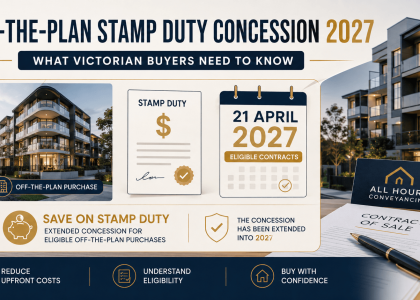
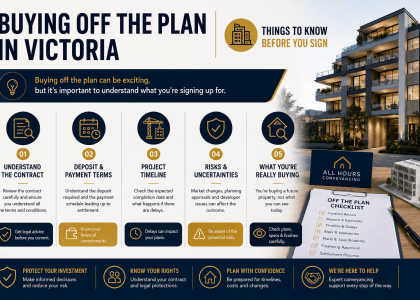
Off-the-Plan Concession
Eligible buyers purchasing off-the-plan may qualify for stamp duty concessions. Victoria has extended certain off-the-plan concession settings for eligible contracts entered into on or before 20 October 2026.
Learn more: Victorian Government – Off-the-Plan Concessions
Step-by-Step First Home Buyer Conveyancing Process
The conveyancing process starts before you sign a contract and continues until settlement is complete.
Obtain Loan Pre-Approval
Before house hunting, obtain mortgage pre-approval so you understand your borrowing capacity and can make stronger offers.
- Know your budget
- Understand deposit requirements
- Check scheme eligibility
- Reduce finance-related delays
Engage a Conveyancer Early
Ideally, engage a conveyancer before making an offer or bidding at auction.
- Review contracts before signing
- Explain special conditions
- Identify potential legal issues
- Estimate government charges and adjustments
Review the Contract of Sale
Contract review is especially important for first home buyers because some agreements contain additional costs, deadlines or special conditions that may be overlooked.
- Contract terms
- Finance clause
- Settlement date
- Special conditions
- Hidden costs or unusual obligations
Related guide: Hidden Fees in Conveyancing Contracts
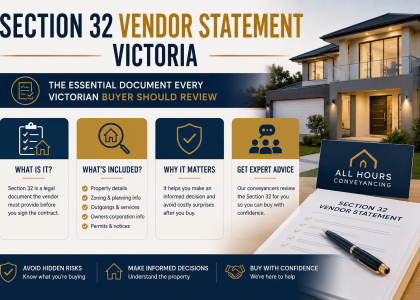
Check the Section 32 Vendor Statement
In Victoria, the Section 32 Vendor Statement provides important information about the property before you sign.
- Title details
- Easements and covenants
- Planning and zoning information
- Rates, outgoings and notices
Learn more: Section 32 Vendor Statement Victoria
Make an Offer or Bid at Auction
Once you are comfortable with the contract, finance position and property checks, you may submit an offer or bid at auction.
- Private treaty
- Auction
- Expressions of interest
- Tender process
Exchange Contracts
Once both parties sign, the property transaction becomes legally binding. Buyers typically pay a deposit at this stage.
- Deposit usually 5% to 10%
- Cooling-off rules vary by state
- Auction purchases are generally unconditional
- Contract dates begin to apply
Conduct Property Searches
After exchange, your conveyancer performs legal searches to identify issues affecting the property.
- Title search
- Council search
- Water authority search
- Land tax search
- Planning and zoning search
Final Finance Approval
Your lender will complete final checks before issuing unconditional approval.
- Property valuation
- Employment verification
- Financial review
- Loan documentation
Pre-Settlement Inspection
Shortly before settlement, buyers usually complete a final inspection to ensure the property is in the agreed condition.
- Fixtures remain in place
- Repairs completed if required
- No new damage
- Property remains in agreed condition
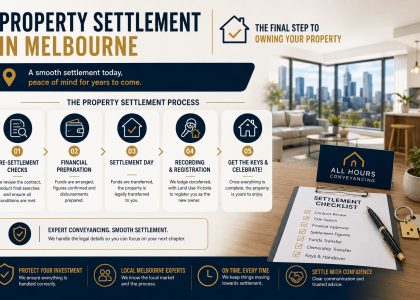
Settlement Day
Settlement is the official transfer of ownership. Your conveyancer coordinates documents, funds and registration.
- Transfer documentation
- Settlement adjustments
- Mortgage registration
- Funds transfer
- Title registration
Common First Home Buyer Mistakes
- Signing before a contract review
- Underestimating total buying costs
- Missing grant or concession deadlines
- Skipping important property searches
- Making major financial changes before settlement
- Assuming auction purchases include a cooling-off period
Buying Costs First Home Buyers Often Forget
- Building and pest inspections
- Conveyancing fees
- Search and registration fees
- Settlement adjustments
- Home insurance
- Moving and utility connection costs
Related guide: How Much Does Conveyancing Cost in Victoria?
How Long Does Conveyancing Take?
Most property settlements occur within 30 to 90 days, depending on the contract, finance approval, property type, search results and lender requirements.
For a detailed breakdown, read: Conveyancing Timelines in Melbourne: How Long Should It Actually Take?
Frequently Asked Questions
Do first home buyers need a conveyancer?
Most first home buyers engage a conveyancer or property solicitor to manage the legal transfer process, review contracts and protect their interests.
Can a conveyancer help with first home buyer grants?
Yes. Many conveyancers assist buyers with grant applications, stamp duty concessions and supporting documentation.
How much deposit does a first home buyer need?
Deposit requirements vary. Some eligible buyers may be able to purchase with a lower deposit through Australian Government schemes, while others may need a larger deposit depending on lender requirements.
Do first home buyers pay stamp duty?
In Victoria, eligible first home buyers may receive a full duty exemption for homes valued up to $600,000 and a concession for homes valued between $600,001 and $750,000.
How long does settlement take?
Most settlements occur within 30 to 90 days after contracts are exchanged, depending on the agreed settlement terms and finance process.
What happens if searches reveal issues?
Your conveyancer will explain the issue and advise whether further investigation, negotiation or contract amendments may be required.
Buying Your First Home?
Contact All Hours Conveyancing for clear, supportive and professional conveyancing guidance across Melbourne and Victoria.
Request a Conveyancing Quote
Suggested SEO title: First Home Buyer Conveyancing Guide Australia 2026 | All Hours Conveyancing
Suggested meta description: Buying your first home in Australia in 2026? Learn the conveyancing process, first home buyer grants, stamp duty concessions, legal checks and settlement steps.