If you are buying property in Victoria, you should always read the Section 32, or vendor statement, before you sign a contract. It sets out what you are really buying beneath the surface.
A good Section 32 gives you the confidence to proceed. A poorly prepared one can hide problems that cost you long after settlement. Here is a plain-language guide to what the Section 32 is, what it must contain, what it does not tell you, and how to read it before you commit.
What is a Section 32?
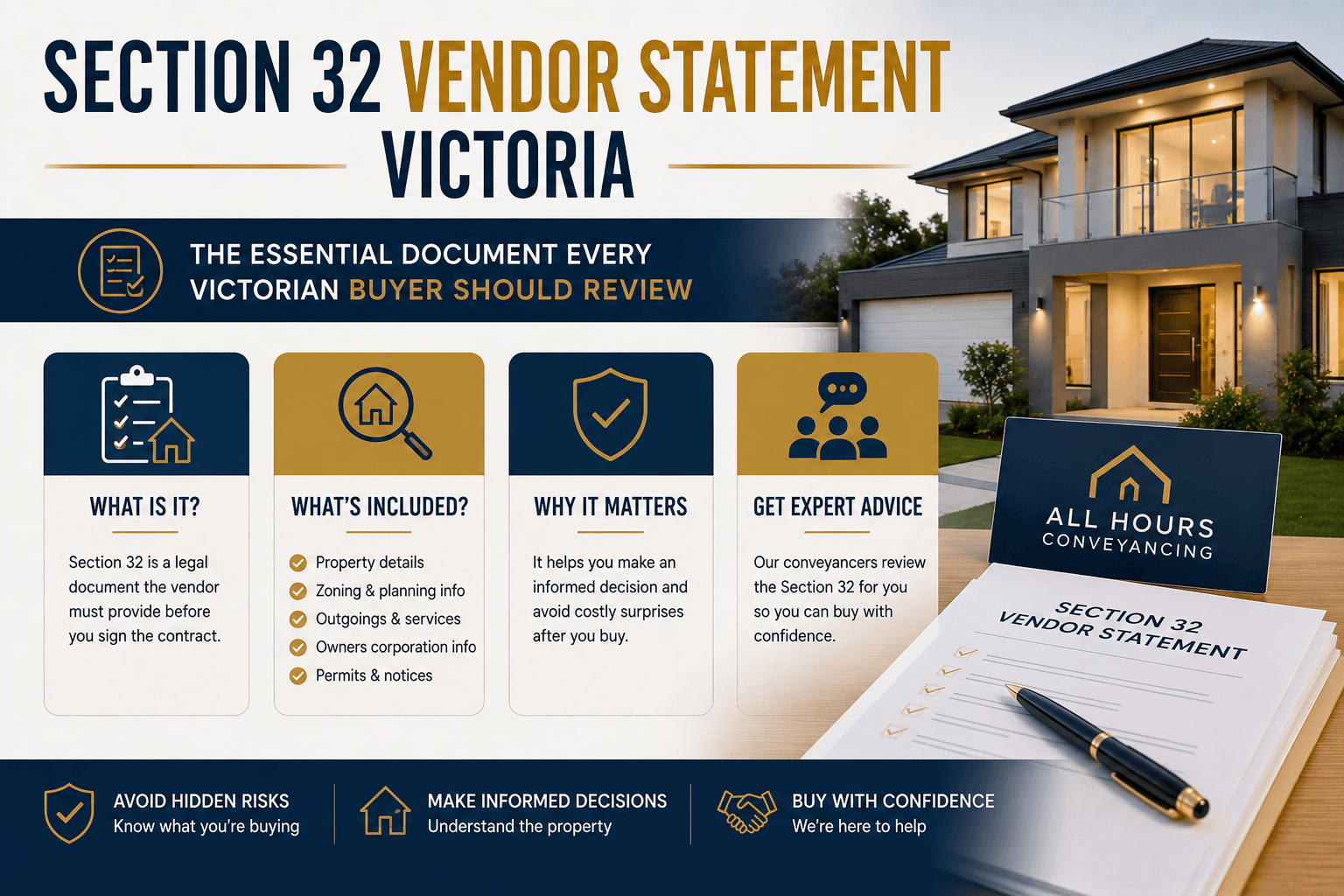
A Section 32 vendor statement is a disclosure document that the seller must give to the buyer before the contract of sale is signed. It takes its name from section 32 of the Sale of Land Act 1962 (Vic), which sets out what the seller has to disclose.
In simple terms, it is the legal picture of the property. It covers who owns the land, what is registered against the title, the financial charges attached to it, and the planning rules that apply. Its purpose is to let you make an informed decision before you are legally committed.
When should you receive it?
You should receive the Section 32 before you sign the contract, and you should have a genuine opportunity to read it. The seller must sign the statement first. If a seller or agent asks you to sign a contract before you have been given the vendor statement, that is a signal to stop and seek advice.
This is different from the cooling-off period, which is a short window to change your mind after signing a private-sale contract. The Section 32 is about what you know before you sign in the first place. You can read more about your options after signing in our guide to the cooling-off period.
Who prepares it?
The law places responsibility for the statement on the vendor, but in practice it is prepared by the vendor’s lawyer or licensed conveyancer. Real estate agents do not prepare Section 32 statements. Preparing one properly means ordering the correct searches and certificates, checking the title, confirming building permits and owners corporation obligations, and compiling it all accurately.
Because the seller carries the legal responsibility for what is in the statement, getting it prepared professionally is as much in the seller’s interest as the buyer’s.
What is inside a Section 32?
The required contents are set out across sections 32A to 32I of the Sale of Land Act. In everyday terms, a Section 32 should cover:
- Title details. A copy of the register search statement (the certificate of title) and the plan of subdivision, showing the registered owner and the dimensions of the land.
- Restrictions on the title. Any mortgages, caveats, covenants, easements, section 173 agreements, government notices or charges. Unregistered easements the vendor is aware of must also be disclosed.
- Financial matters. Rates, water charges, land tax, owners corporation fees and any other outgoings or levies attached to the land.
- Planning information. The planning scheme, zoning, any overlays, whether the land is in a bushfire-prone area, and road access.
- Building permits. Building permits issued in the past seven years, and details of any owner-builder works, including warranty insurance where required.
- Connected services. Which of electricity, gas, water, sewerage and telephone are connected, and disclosure where a service is not connected.
- Owners corporation information. For apartments and units, the owners corporation certificate and its attachments, including fees, insurance, rules and any notices.
- Notices and orders. Any government or authority notices affecting the land, such as a building order or a fencing notice.
- A due-diligence warning. A prescribed statutory warning and a reference to the due diligence checklist published by Consumer Affairs Victoria. It is there to be read, not skipped.
What a Section 32 does not tell you
This is the point many buyers miss. A Section 32 is a legal disclosure about the land. It is not a condition report on the building.
It will not tell you whether the roof leaks, the wiring is safe, the plumbing is sound, or the walls are cracking. The existence of a building permit does not prove the work was done well. Boundary measurements on the title are not a guarantee of where the fences actually sit.
For that reason, a Section 32 is the starting point for your due diligence, not the whole of it. A careful buyer also arranges a pre-purchase building and pest inspection, makes any planning enquiries relevant to their plans, confirms finance and insurance, and has the contract and vendor statement reviewed together before signing.
What to check before you sign
A few practical things worth confirming, ideally with your conveyancer:
- The person selling is the registered owner, and every registered proprietor has signed.
- The plan of subdivision matches what you walked through, particularly fences, driveways and easements. An easement for drainage or sewerage can sit right where you were planning an extension.
- Any covenant that limits what you can build or how you can use the land.
- For units and apartments, the owners corporation financials, insurance and any hint of major upcoming repairs or special levies.
- Whether recent renovations were properly permitted.
- The age of the certificates. A statement relying on out-of-date searches should be refreshed.
What happens if the Section 32 is wrong or incomplete?
If the statement is missing required information, contains false information, or is otherwise defective, the buyer may have a right to end the contract before settlement. This right is not automatic and it is not open-ended, so if you have concerns you should get advice promptly rather than assuming you can simply walk away.
There is also a protection for sellers who have acted honestly and reasonably where the buyer is substantially no worse off, so outcomes depend closely on the facts. Once settlement has happened, the ability to cancel is generally gone, although other claims may still be possible. Providing false or misleading information can also have consequences for a seller under consumer protection law.
The practical takeaway for both sides is the same. Have the Section 32 prepared and reviewed properly, and raise any concern before you sign or settle, not after.
Talk to us before you sign
At All Hours Conveyancing, reviewing vendor statements is core to what we do. Across 20+ years and thousands of property transactions, we have seen a careful read of the Section 32 protect buyers, and a clean, well-prepared statement help sellers reach settlement without surprises.
Our founder, Shakila Maclean, is a licensed conveyancer and President of the Australian Institute of Conveyancers, Victorian Division, so the advice you receive reflects current Victorian practice.
If you have a Section 32 and contract in front of you, or you are preparing to sell and need a vendor statement done right, contact us for a review and a clear services and fee guide before you commit.
Frequently Asked Questions
What is a Section 32 vendor statement? It is a disclosure document that the seller must give the buyer before the contract of sale is signed. Required under section 32 of the Sale of Land Act 1962 (Vic), it sets out the legal details of the property, including title, restrictions, financial charges and planning information.
When should I receive the Section 32? Before you sign the contract, and with a genuine opportunity to read it. The seller must sign the statement first. If you are asked to sign a contract before receiving the vendor statement, stop and seek advice.
Who prepares the Section 32? The vendor is legally responsible for it, but in practice it is prepared by the vendor’s lawyer or licensed conveyancer. Real estate agents do not prepare Section 32 statements.
Does a Section 32 tell me about the condition of the building? No. A Section 32 is a legal disclosure about the land, not a condition report. It does not cover the physical state of the roof, plumbing, wiring or structure, which is why a pre-purchase building and pest inspection is still recommended.
What happens if the Section 32 is wrong or incomplete? The buyer may have a right to end the contract before settlement, though this is not automatic and depends on the circumstances. Get advice promptly rather than assuming you can walk away, and raise concerns before settlement, after which the ability to cancel is generally lost.
Do I still need a building inspection if I have a Section 32? Yes. The Section 32 covers the legal side of the property. A building and pest inspection covers the physical condition. They do different jobs, and a careful buyer uses both.