Imagine you've just signed a contract to buy your dream home in Victoria. The next day, your building inspector discovers major structural issues-or your bank refuses your loan.
Can you walk away?
The answer depends on whether you're relying on the cooling-off period or a subject to finance clause.
A subject to finance clause is a contractual condition that makes the sale dependent on the buyer receiving formal finance approval by an agreed date. If the lender declines the loan application, the buyer can terminate the contract and recover their full deposit without penalty. This clause offers buyer protection beyond the three-day cooling-off window. If you'd like to understand how these clauses are drafted, negotiated, and enforced in Victoria, read our guide to finance clause in Victoria.
Although many buyers think they're the same thing, these two protections work very differently. Understanding both could save you thousands of dollars-and your deposit.
In this guide, we'll explain how each works, when they apply, and how to use them together to protect yourself before settlement.
Cooling Off and Subject to Finance Clauses Compared
Both clauses allow buyer rights to exit a property contract, but their legal basis and scope differ sharply. The table below clarifies the core distinctions in contract termination eligibility and finance clause meaning.
Key Points: When Does Cooling Off Period Start in Victoria?
• Duration: Three clear business days, excluding weekends and public holidays.
• Eligibility: Applies to most private sales of residential property under 20 hectares.
• Trigger: Begins the first business day after the buyer signs the contract.
• Penalty: The greater of $100 or 0.2% of the purchase price is forfeited from the deposit.
How the Subject to Finance Clause Protects Buyers
A subject to finance clause is a contractual condition that makes the sale dependent on the buyer receiving formal finance approval by an agreed date. If the lender declines the loan application, the buyer can terminate the contract and recover their full deposit without penalty. This clause offers buyer protection beyond the three-day cooling-off window. For example, if your lender declines a $650,000 loan application on day 12 of a 14-day finance clause, you will provide the written decline letter to the vendor's solicitor within the contractual timeframe and recover your full deposit. Buyers must follow strict compliance requirements: obtain a written decline letter from the lender, notify the vendor within the contractual timeframe, and demonstrate they genuinely attempted to secure finance approval.
When Is the Cooling Off Period Not Available?
Several categories of property transactions exclude the cooling-off period entirely. Properties purchased at auction or within three clear business days before or after a scheduled auction receive no statutory cooling-off protection. This applies whether the property sold at auction or was passed in and sold immediately after. Commercial property, industrial premises, and large rural properties over 20 hectares used primarily for farming are also excluded.
Corporate body purchases fall outside the cooling-off rules. If you buy through a company entity rather than as an individual, the statutory protection does not apply. The same exclusion covers buyers who are licensed estate agents and buyers who have previously signed a contract for the same property with the same vendor. Before committing to any private sale, confirm your eligibility with a licensed conveyancer.
What Is the Penalty for Cancelling During the Cooling Off Period?
The penalty calculation follows a simple formula. You forfeit the greater of $100 or 0.2% of the purchase price from your deposit. The remaining deposit refund returns to you. On a $750,000 property, you would lose $1,500. On a $400,000 property, the penalty equals $800.
This cost is relatively minor compared to the consequences of proceeding with a property you cannot afford or one with serious defects. If your contract includes a subject to finance clause and you exercise it correctly, you pay no penalty at all. The distinction matters: cooling-off costs you a small percentage, while a valid finance clause exit costs nothing.
Steps to Cancel a Contract Using the Cooling Off Period
• Decide early. Do not wait until the final hours. Start the process on day one of the cooling-off period.
• Prepare written notice. Draft a clear statement of your intention to withdraw. No special format is required.
• Deliver notice to the correct party. Send your notice to the vendor, their real estate agent, or their solicitor.
• Confirm receipt before the deadline. The notice must arrive before midnight on the third business day. Sending alone is insufficient; delivery and timing both matter.
• Engage your conveyancer. Your conveyancer can prepare and serve the notice on your behalf to avoid procedural errors.
The Cooling Off Period and Other Key Victorian Property Laws
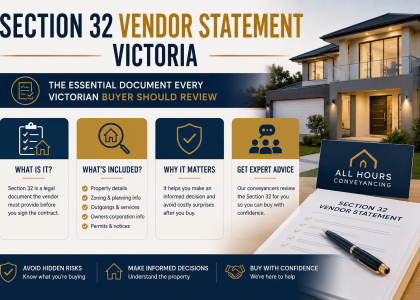
The cooling-off period operates alongside other buyer protections in Victorian property law, including Section 32 vendor statements and inspection conditions.
Arranging Building and Pest Inspections During the Cooling Off Period
Schedule your building inspection as early as possible within the cooling-off window. Three business days leaves minimal time for a thorough assessment. Many experienced buyers book inspectors before signing to receive results within the cooling-off period.
• Timeliness tip: Pre-arrange your inspector and provide the property address so they can attend on day one of the cooling-off period.
Common Mistakes and Myths About the Cooling Off Period
Buyers frequently assume the cooling-off period applies to every property purchase. Three common misconceptions lead to costly errors:
• Myth: Auction buyers get cooling-off rights. They do not. Contracts signed at auction or within three business days of an auction are immediately binding.
• Myth: Corporate buyers qualify. Companies and corporate body purchasers are excluded from the statutory cooling-off period.
• Myth: Sellers can also cool off. Only buyers receive this statutory right. Once a vendor signs, they are bound by the contract terms.
Should You Consider Waiving the Cooling Off Period?
Waiving cooling off converts your offer into an unconditional offer, which strengthens your position against competing buyers. Vendors prefer unconditional contracts as they eliminate settlement risk. In competitive Melbourne suburbs, some agents openly request waiver certificates. Buyers who waive gain an advantage, but they lose their only statutory exit without consequences.
The risk is substantial. If your lender declines finance after you have waived cooling off and your contract contains no subject to finance clause, you must complete the purchase or face losing your entire deposit plus potential damages. Before waiving, complete building inspections, obtain formal loan pre-approval, and have your conveyancer review the Section 32 statement and contract in full. Only waive after receiving professional legal advice specific to your situation. A better strategy is negotiating a finance clause with a shorter deadline rather than removing all exit protections entirely.
Final Thoughts and Next Steps for Victorian Property Buyers
The cooling-off period and subject to finance clause protect Victorian buyers in different ways. The cooling-off period offers a short, statutory exit for any reason with a minor penalty. The finance clause provides a longer, negotiated exit tied specifically to loan approval. Using both in a private sale contract gives you the strongest position as a buyer.
Engage a conveyancer before signing any property contract. Choosing the right professional can make a significant difference when reviewing contract conditions, negotiating finance clauses, and protecting your interests. If you're unsure which professional is best suited to your transaction, see our guide on the different types of conveyancers in Melbourne. If you are comparing the cooling-off period vs subject to finance in Victoria for your next purchase, speak with a licensed conveyancer who can tailor property contract advice to your specific transaction and protect your deposit from day one.
If you're purchasing with a partner, family member, or friend, it's also important to decide how you'll legally own the property. Learn the differences between Joint Tenants vs Tenants In Common before signing your contract.