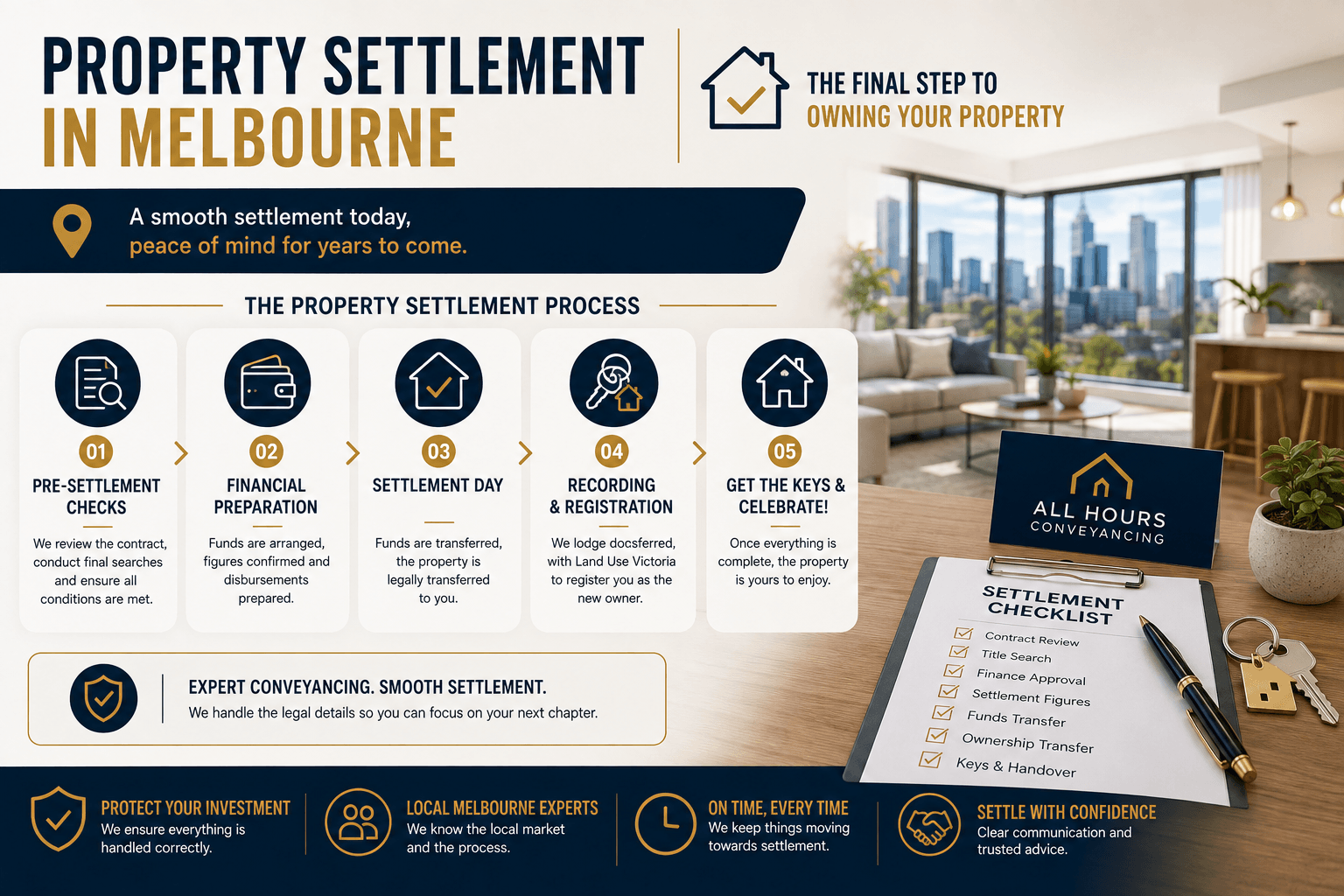
Many Melbourne buyers sign a property contract without a clear picture of what happens between contract day and key handover.
This guide explains how property settlement works in Melbourne at each stage. You will learn the timeline, the roles of each party, and the practical steps to protect your deposit and reach settlement without delays. It also covers what happens on settlement day, how long settlement takes on the day itself, and your pre-settlement inspection checklist.
All Hours Conveyancing has guided thousands of property transactions over 20 years since 2005, holds a 4.8 star rating from 129 Google reviews, and is led by Shakila Maclean, President of the Australian Institute of Conveyancers (Victorian Division).
Settlement Process Overview at a Glance
- Contract signing: Both parties execute the Contract of Sale and the settlement clock begins.
- Cooling-off period: Buyers or Corporate Buyers receive 3 business days to withdraw (not applicable to auction purchases).
- Finance and searches: Your lender assesses the loan while your conveyancer conducts title, council, and water searches.
- Settlement preparation: Transfer documents are signed, settlement figures confirmed, and electronic settlement booked through PEXA.
- Settlement day: Funds transfer, ownership registers in your name, and the agent releases the keys.
This sequence applies to most residential property settlement transactions across Melbourne and Victoria. A licensed conveyancer coordinates these steps so you meet every obligation on time.
Understanding Settlement: The Basics
Property settlement is the legal event where the buyer pays the remaining purchase price and receives registered ownership of the property title. In Victoria, this process is governed by the Sale of Land Act 1962 and conducted electronically through the PEXA platform. Electronic settlement through PEXA has been mandatory for standard residential transactions in Victoria since 1 August 2019, so there are no paper titles or bank cheques exchanged on the day.
What is property settlement in practical terms? It is the single day when your conveyancer, the seller’s representative, and both lenders exchange funds and documents simultaneously. Your conveyancer manages the entire transaction on your behalf.
Common Types of Settlement in Victoria
- Standard residential settlement: The most common type, occurring on the agreed contract date with funds and title exchanged electronically.
- Simultaneous settlement: You sell one property and buy another on the same day, using sale proceeds to fund the purchase.
- Refinance settlement: Your existing mortgage is discharged and replaced with a new loan, without a change of ownership.
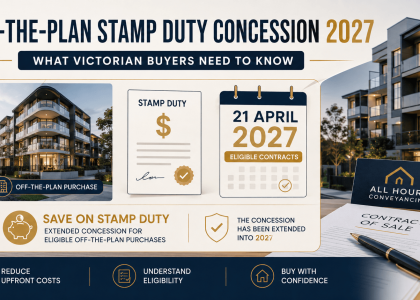
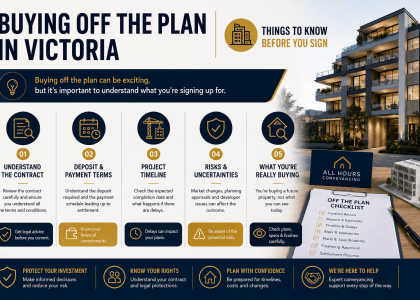
- Off-the-plan settlement: Settlement occurs when the developer completes construction and obtains the certificate of occupancy.
- Commercial property settlement: Follows a similar structure but involves GST considerations and longer due diligence periods.
- Related party or family transfer: Ownership transfers between family members, often at no sale price but still requiring conveyancing services for the legal transfer.
Trust Accounts and Deposit Security
When you pay your deposit, the funds are held in a trust account managed by the real estate agent or your conveyancer. This trust account is regulated under Victorian law to protect your money until settlement occurs.
Your deposit remains secure in the trust account for the full settlement period. If the contract falls through during the cooling-off period, or if a finance clause is triggered, the deposit is returned to you from this account. Your conveyancer verifies the trust account arrangements and monitors your deposit security from contract signing through to settlement day.
Protect your funds from settlement scams. Fraudsters sometimes email fake bank account details close to settlement, hoping you transfer money to the wrong account. Always confirm payment details directly with your conveyancer by phone before sending any funds, and never rely on bank details sent by email alone.
Key Responsibilities Throughout Settlement
Three parties carry distinct obligations during a Melbourne property transaction: the lender, the conveyancer, and the buyer. Each must complete specific tasks within set timeframes. Missing a single deadline can delay settlement and trigger penalty interest under the contract.
Lender's Role at Settlement
- Provides the approved loan funds to complete the purchase.
- Registers a mortgage over the property title through PEXA.
- Confirms settlement figures and timing with your conveyancer.
- Releases funds on settlement day once all lender conditions are satisfied.
Your Conveyancer or Solicitor
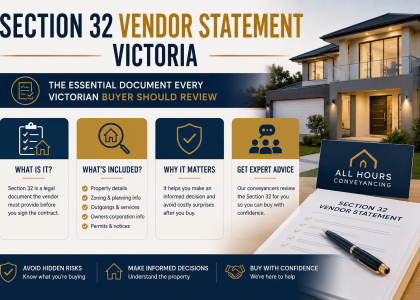
- Reviews the Contract of Sale and Section 32 Vendor Statement for legal risks.
- Conducts title, council, water, and planning searches to identify property issues.
- Confirms the seller's existing mortgage will be discharged at settlement.
- Calculates stamp duty, settlement adjustments, and all payable amounts.
- Registers the transfer of ownership and new mortgage through PEXA on settlement day.
Your conveyancer responsibilities at settlement extend to liaising with all parties and meeting every deadline in the conveyancing process.
What Buyers Must Do
- Sign the Contract of Sale correctly with matching legal names.
- Pay the deposit (typically 10%) upon contract execution.
- Obtain finance approval within the timeframe specified in the contract.
- Arrange building and contents insurance effective from the contract date.
- Complete the final inspection before settlement day.
- Provide identity verification documents to your conveyancer without delay.
First home buyers in Melbourne often need additional time for grant applications. See our First Home Buyer guide for the current grant and stamp duty concessions.
What Happens on Settlement Day in Melbourne?
On settlement day in Melbourne, your conveyancer and lender complete these steps in sequence through the PEXA electronic platform:
- Your conveyancer logs into PEXA and confirms all settlement figures are correct.
- The lender releases the approved loan funds into the PEXA workspace.
- Your conveyancer transfers the balance of the purchase price to the seller.
- The seller’s existing mortgage is discharged from the title.
- Your new mortgage is registered against the property.
- Legal ownership transfers into your name on the Land Use Victoria register.
- Land transfer duty is lodged with the State Revenue Office.
- The real estate agent receives notification and releases the keys to you.
How long does settlement take on the day?
The digital settlement itself is quick. Once your booked PEXA window opens, settlement usually completes within 15 to 90 minutes. A typical Melbourne settlement day runs like this:
- Before 9am: confirm your loan funds have cleared and complete your pre-settlement inspection.
- From around 2pm: your conveyancer and both banks lock the PEXA workspace and settlement runs.
- Within 15 to 90 minutes: funds transfer, your mortgage registers, and legal ownership passes to you.
- Within 30 to 60 minutes of completion: sellers see funds clear and the agent is authorised to release your keys.
How Are Settlement Adjustments Calculated?
Settlement adjustments split ongoing property charges between buyer and seller based on the settlement date. Your conveyancer calculates the seller’s share of council rates, water rates, land tax, and owners corporation levies up to and including settlement day.
You take responsibility for these charges from the day after settlement. If the seller has prepaid rates beyond the settlement date, the adjustment credits that amount back to the seller by adding it to the purchase price.
Your conveyancer itemises every adjustment in a settlement statement for your review before the transaction proceeds.
How to Prepare for Settlement Day
Preparation determines whether your settlement runs on schedule or faces costly delays. Confirm your finance approval is unconditional at least two weeks before settlement. Return all signed loan documents to your lender immediately.
Pre-Settlement Checklist for Buyers
- Confirm unconditional finance approval and return signed loan documents to your lender.
- Verify the settlement date on your contract matches your lender's records.
- Transfer any shortfall funds your lender requires into the nominated account.
- Activate your building and contents insurance policy from the contract date.
- Review the settlement adjustment statement your conveyancer provides.
- Book and attend your final inspection within the conveyancing timeline.
Complete each item at least one week before settlement.
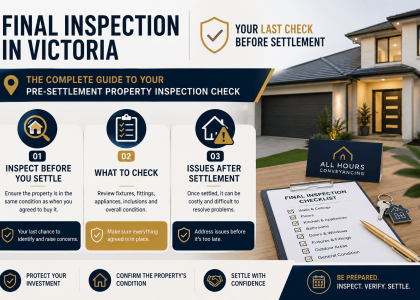
Pre-Settlement Inspection (Final Inspection): What to Check
Your pre-settlement inspection, sometimes called the final inspection, is your last walk-through before the property legally becomes yours.
The final inspection takes place in the week before settlement day. This is your last opportunity to confirm the property matches the condition described in the contract.
- Test all appliances, heating, cooling, and hot water systems.
- Check fixtures, fittings, and surfaces for damage that occurred after contract signing.
- Confirm the seller has completed any agreed repairs listed in special conditions.
- Verify all chattels and personal items have been removed from the property.
- Check that keys, garage remotes, and access devices are available for handover.
- Inspect gardens and outdoor areas to confirm no plants or structures have been removed.
Report any issues to your conveyancer immediately. They can negotiate a remedy or withhold funds at settlement to cover rectification costs.
Special Tips for New Home Purchases
If you are purchasing a newly built property, confirm all construction is finished and appliances are installed and operational before settlement. A new home inspection should include a defects report from a qualified building inspector.
What Can Hold Up Settlement?
Property settlement delays in Melbourne typically arise from finance approval issues, missing or unsigned documents, unresolved title problems such as caveats or encumbrances, and bank processing backlogs. Late discharge of the seller’s existing mortgage causes the most frequent same-day delays. Your conveyancer manages these risks by coordinating with all parties well before the settlement date.
What Happens After Settlement Day
- Loan drawdown begins: Your lender activates mortgage repayments according to your loan schedule.
- Land transfer duty payment: Your conveyancer/solicitor will attend to pay stamp duty (land transfer duty) to the State Revenue Office Victoria on your behalf at settlement.
- Ongoing costs transfer: Council rates, water charges, and owners corporation fees become your responsibility from the day after settlement.
- Keys and possession: Collect the keys from the real estate agent and take physical possession of your property.
Further Reading and Useful Guides
- Consumer Affairs Victoria provides a complete online portal outlining every stage of buying and selling property in Victoria, including contracts, conveyancing, and settlement obligations.
- State Revenue Office Victoria explains land transfer (stamp) duty rates, exemptions and concessions.
For personalised guidance on your transaction, consult a licensed conveyancer who specialises in Melbourne property law. As one community guide on the property buying process notes, the loan document will specify how much your lender pays on settlement, making professional review of these figures a priority.
How to Handle Settlement Delays
Contact your conveyancer as soon as you become aware of any issue that could affect your settlement date. Settlement delays guidance from your legal representative protects your position under the contract and minimises penalty interest exposure.
Tips for Paying Off Your Loan Faster
Switching to fortnightly repayments and directing extra funds into an offset account accelerates paying your home loan faster without refinancing.
Bank Valuations and Settlement
Your lender orders a bank property valuation to confirm the property supports the loan amount. A low valuation can reduce your approved borrowing and delay settlement.
Frequently Asked Questions
How long does the property settlement process take in Melbourne?
Most residential settlements in Melbourne complete within 30 to 90 days of contract signing. Common settlement periods include 30, 45, 60, and 90 days. The buyer and seller agree on the exact date in the Contract of Sale, and this date governs the entire transaction timeline.
Who manages the property settlement process?
A licensed conveyancer or solicitor manages the legal, financial, and administrative steps of settlement on your behalf. They coordinate with your lender, the seller’s legal representative, Land Use Victoria, and the State Revenue Office to complete the ownership transfer.
What documents are required for property settlement in Melbourne?
You need a signed Contract of Sale, the Section 32 Vendor Statement, identity verification documents (certified copies of passport or driver’s licence), unconditional loan approval and signed mortgage documents, proof of building and contents insurance, and any building or pest inspection reports. Your conveyancer will specify the exact documents required for your transaction.
Can the settlement period be extended?
Yes, both buyer and seller must agree in writing to any extension. Extensions occur when finance approval takes longer than expected, documents remain outstanding, or last-minute legal issues arise. Notify your conveyancer immediately if you anticipate any delay so they can negotiate revised terms before penalty provisions activate.
What happens if settlement is delayed?
The defaulting party faces penalty interest on the outstanding balance under the contract. Your conveyancer negotiates with all parties to resolve the cause and sets a new settlement date.
Can you move in on settlement day in Victoria?
Technically, yes. You can take possession once settlement confirms and the agent releases the keys. Practically, settlement can finalise late in the afternoon, and same-day delays are common. Most buyers schedule their move for the day after settlement to avoid disruption from unexpected timing changes.
How long does settlement take on the day?
In Victoria, the electronic settlement itself usually completes within 15 to 90 minutes once your booked PEXA time arrives. Delays can happen if a bank is not ready or funds have not cleared, so your conveyancer confirms every figure the day before to keep the day on track.
What is a pre-settlement inspection and is it mandatory?
A pre-settlement inspection is your final walk-through, usually in the 24 to 48 hours before settlement, to confirm the property is in the condition set out in your contract. It is not legally mandatory, but it is strongly recommended so any issues can be raised before settlement completes
Final Thoughts
The property settlement process follows a defined sequence from contract signing through to key handover. Each stage carries specific deadlines and obligations for the buyer, seller, lender, and conveyancer. Trust accounts protect your deposit, and professional oversight keeps your transaction on track.
Professional guidance from a licensed conveyancer removes the complexity from your transaction. They manage the legal checks, coordinate with your lender, calculate adjustments, and attend settlement on your behalf. Melbourne property advice from an experienced practitioner protects your interests at every stage.
With thousands of settlements guided since 2005 and a 4.8 star rating from 129 Google reviews, All Hours Conveyancing, led by Australian Institute of Conveyancers (VIC) President Shakila Maclean, manages your settlement from contract through to key handover. If you are buying or selling property in Melbourne, contact All Hours Conveyancing at (03) 9649 7832 to discuss your transaction. A pre-purchase contract review gives you clarity on your obligations before you sign and commit to the property settlement process.