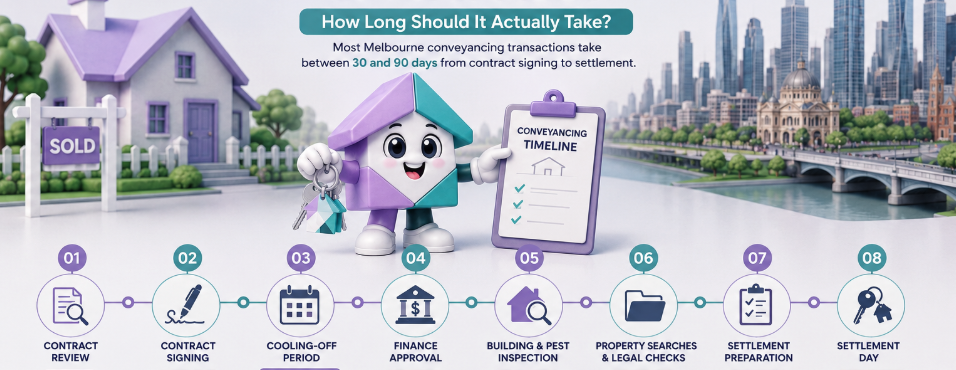
Melbourne Conveyancing Timelines
Buying or selling property in Melbourne is exciting, but many clients ask the same question: how long does conveyancing actually take? In most residential transactions, settlement takes between 30 and 90 days from contract signing.
How Long Does Conveyancing Take in Melbourne?
Most Melbourne conveyancing transactions take between 30 and 90 days from contract signing to settlement. However, the exact timeline depends on finance approval, contract conditions, property searches, building and pest inspections, lender requirements and how quickly all parties respond.
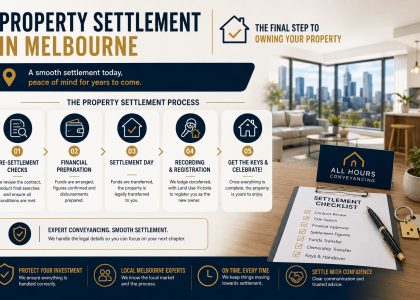
Consumer Affairs Victoria explains that property settlement is the process where the buyer pays the balance of the sale price and the seller transfers ownership of the property. You can read more in the Consumer Affairs Victoria property settlement guide .Typical Conveyancing Timeline in Melbourne
Every transaction is different, but a standard Melbourne conveyancing timeline often looks like this:| Stage | Estimated Time |
|---|---|
| Contract review | 1–3 days |
| Contract signing | Immediate once terms are agreed |
| Cooling-off period | 3 business days, if applicable |
| Finance approval | 7–21 days |
| Building and pest inspection | 7–21 days |
| Property searches and legal checks | 1–2 weeks |
| Settlement preparation | 2–8 weeks |
| Settlement day | Usually 30–90 days after contract date |
Step-by-Step Conveyancing Timeline
Here is what typically happens between contract review and settlement day.01
Contract Review
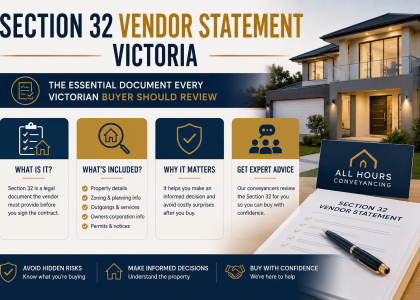
Estimated time: 1–3 days. Before signing, your conveyancer reviews the Contract of Sale and Section 32 Vendor Statement to identify legal risks, unusual clauses or hidden obligations.- Contract terms and special conditions
- Easements, covenants and title issues
- Owners corporation obligations
- Outstanding rates or charges
- Zoning, planning or building restrictions
02
Contract Signing
Once both parties sign the contract, the property is officially under contract and the conveyancing process formally begins.- The deposit is paid
- Contract dates begin to apply
- Finance and inspection deadlines become important
- Settlement preparation begins
03
Cooling-Off Period
Estimated time: 3 business days, if applicable. In Victoria, many residential buyers have a three-business-day cooling-off period after signing.- Cooling-off does not apply to every purchase
- Auction purchases are commonly excluded
- Commercial and industrial properties may be excluded
- Corporate purchasers may not receive cooling-off rights
04
Finance Approval
Estimated time: 7–21 days. Finance approval is one of the most common causes of delay in Melbourne conveyancing.- Lender assessment of income and expenses
- Supporting documents reviewed
- Property valuation completed
- Formal loan approval issued
- Loan and mortgage documents prepared
05
Building and Pest Inspection
Estimated time: 7–21 days. A building and pest inspection helps buyers understand the physical condition of the property before proceeding further.- Book a licensed building and pest inspector
- Arrange access with the selling agent
- Check structural issues, defects and moisture damage
- Review termite activity or pest infestation risks
- Discuss serious issues with your conveyancer
06
Property Searches and Legal Checks
Estimated time: 1–2 weeks. Your conveyancer conducts searches to identify legal and financial matters affecting the property.- Title searches
- Council rate searches
- Water authority searches
- Land tax certificates
- Owners corporation information
- Planning and zoning checks
07
Preparing for Settlement
Estimated time: 2–8 weeks. Once finance is approved and legal checks are underway, both parties prepare for settlement.- Signing transfer documents
- Coordinating with lenders
- Confirming settlement figures
- Adjusting council rates and water charges
- Booking electronic settlement through PEXA
08
Settlement Day
Settlement is when ownership officially changes hands. The buyer pays the balance, legal ownership transfers and keys can be released.- Funds are transferred
- Mortgage is registered or discharged
- Legal ownership transfers
- Seller receives sale proceeds
- Buyer receives the keys
What Can Delay Conveyancing?
- Finance approval delays
- Contract disputes
- Missing documents
- Property title issues
- Problems with property searches
- Building and pest inspection issues
- Bank processing delays
- Chain settlements
Can Conveyancing Be Fast-Tracked?
Yes, in some cases. A shorter settlement of 7, 14 or 21 days may be possible, but only where all parties are ready.- Buyer has strong finance pre-approval
- No property chain
- Documents are prepared early
- Lender can meet the shorter timeframe
- All parties respond quickly
How to Avoid Delays in Melbourne Conveyancing
For Buyers
- Get finance pre-approval early
- Arrange contract review before signing
- Respond quickly to document requests
- Book building and pest inspections promptly
- Avoid major financial changes before settlement
For Sellers
- Prepare the Section 32 Vendor Statement early
- Resolve title issues before listing
- Provide accurate disclosure documents
- Notify your lender early if discharging a mortgage
- Stay responsive during settlement preparation